The Psychology Behind FOMO and How It Drains Your Savings
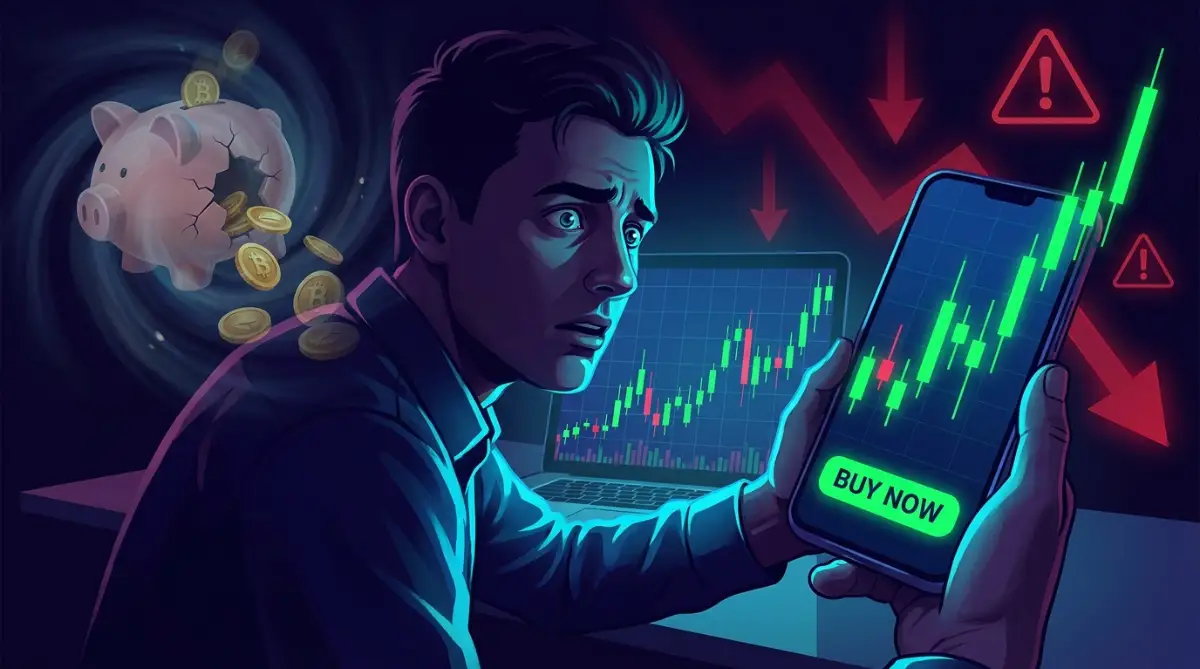
The crypto market moves insanely fast compared to most other financial markets. Prices can shoot up in hours and crash just as quickly. Social media is full of stories about overnight millionaires, viral trading screenshots, and predictions about the “next big coin.” While all of that can feel exciting, it also creates one of the biggest psychological traps investors run into: Fear of Missing Out (FOMO).
FOMO is way more than just an emotional reaction. It’s a strong psychological force that shapes how people think, decide, and handle money. Instead of investing based on research and long-term planning, a lot of people end up chasing trends just because everyone else seems to be making money.
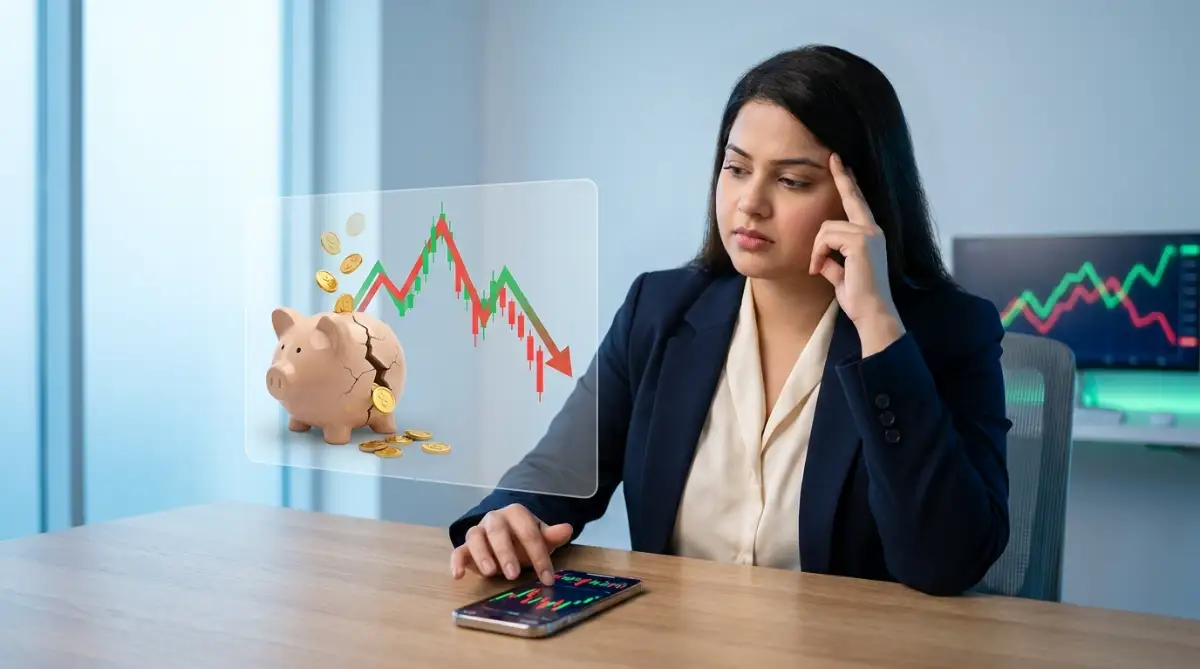
The unfortunate truth is that FOMO rarely builds wealth. More often, it slowly drains savings through impulsive decisions, emotional buying, unnecessary risk-taking, and repeated mistakes.
Understanding why FOMO happens is one of the most important lessons for anyone getting into crypto investing. Once you start noticing it, you can make way smarter financial decisions that protect both your money and your peace of mind.
Why FOMO Is So Powerful
We naturally compare ourselves to others. For most of human history, following the crowd helped us survive. Today, that same instinct shows up in financial decisions.
When investors constantly see headlines like:
- “This coin gained 400%.”
- “Early investors became millionaires.”
- “Everyone is buying this token.”
their brains start to feel like missing out would be a huge mistake.
Instead of asking whether an investment is actually solid, many people end up asking one thing:
“What if I miss the next big rally?”
And that one thought can completely override logic.
The Science Behind Fear of Missing Out
Psychologists describe FOMO as the anxiety that others are experiencing rewarding opportunities while you’re being left behind.
In investing, this feeling is driven by a few cognitive biases.
Social Proof
People assume that if a lot of others are buying something, it must be the right move.
Popularity gets mistaken for quality.
Loss Aversion
Studies show people often fear missing gains almost as much as they fear losing money.
Ironically, that fear can push them into even riskier investments.
Confirmation Bias
Once someone believes a coin will keep going up, they only look for info that supports that belief and ignore warning signs.
Recency Bias
Recent price pumps feel like they’ll just keep going, even though history shows sharp rises are usually temporary.
Together, these biases make emotional investing feel totally logical in the moment.
How Social Media Makes FOMO Worse
Crypto investing today is tightly connected to social media.
Every day, investors see:
- Viral success stories
- Luxury lifestyle posts
- Huge profit screenshots
- Influencer predictions
- “Last chance” hype posts
- Buzz around new projects
But very few people talk about their losses.
You rarely see:
- Big losses
- Panic selling
- Bad entries
- Failed trades
- Long periods of negative returns
So the picture gets really distorted.
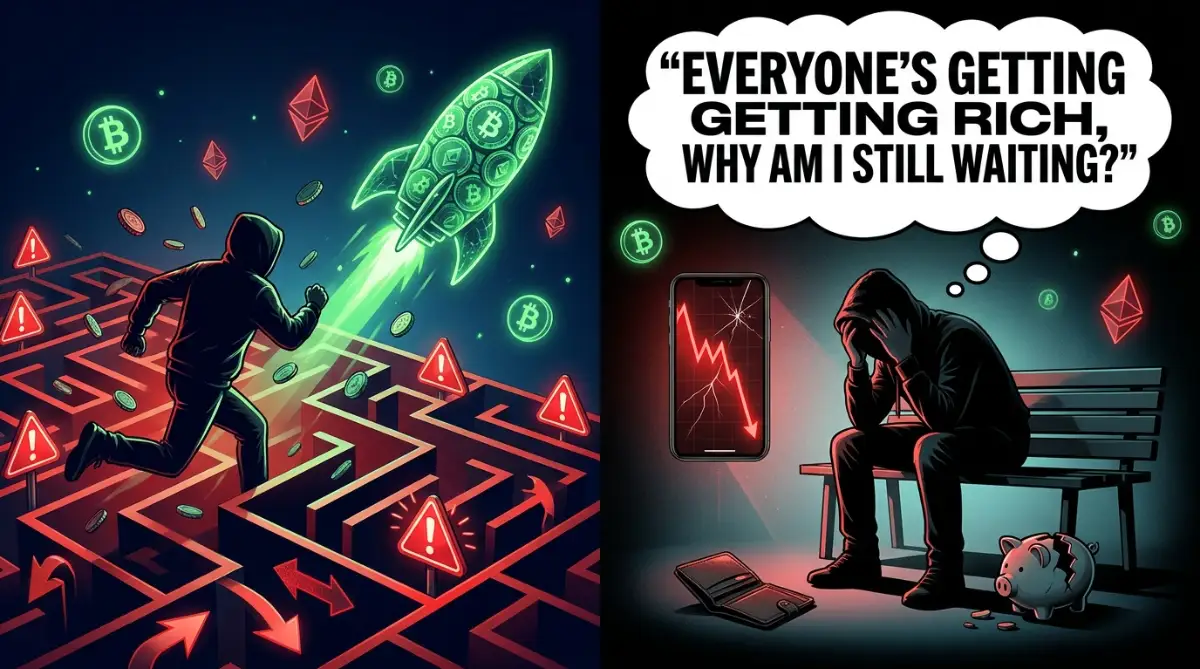
It looks like everyone is winning all the time, even though a lot of people are quietly losing money in the background.
That illusion adds even more pressure to act fast.
The Emotional Cycle That Leads to Losses
FOMO usually follows a pretty predictable pattern.
Step One: Seeing Others Win
You notice people talking about big gains.
The hype spreads quickly.
Excitement builds.
Step Two: Feeling Left Out
Instead of curiosity, you start feeling anxious.
You worry you’re missing your chance.
Step Three: Buying Without Research
Instead of checking fundamentals, risks, or long-term value, you just jump in.
Emotion takes over.
Step Four: Market Pullback
The hype cools off.
Prices start dropping.
Panic begins.
Step Five: Selling in Fear
Fear replaces excitement.
Many investors sell just to stop the bleeding.
Often, this happens right near the bottom.
Then the cycle repeats with the next trending coin.
Warning Signs FOMO Is Driving You
You might be dealing with FOMO if you:
- Buy just because others are buying
- Skip research before investing
- Constantly check price charts
- Feel anxious when not holding trending coins
- Ignore your own plan
- Take bigger risks during price pumps
- Think opportunities won’t come again
- Feel regret every time something else pumps
Noticing this early can save you a lot of money.
How Emotional Investing Slowly Drains Savings
Most people think losing money comes from one big bad trade.
But in reality, savings often disappear through lots of small emotional decisions.
For example:
An investor keeps buying after prices already pumped.
Each time:
- They buy near the top
- Prices drop
- They panic sell
- They move to the next hype coin
- And repeat
Each loss might not feel huge on its own.
But over time, fees, bad timing, and emotional decisions slowly eat away at savings.
This is way more common than people think.
The Hidden Cost of Chasing Everything
Crypto has thousands of opportunities.
No one can catch them all.
Trying to do so leads to problems like:
More Trading, More Mistakes
The more you trade, the more chances you have to mess up.
Less Research
Fast decisions usually mean less understanding.
Messy Portfolios
Constant switching leads to no clear strategy.
Higher Stress
Watching every move creates anxiety and burnout.
Long-term success is more about discipline than excitement.
Why Patience Usually Wins
Successful investors don’t try to catch every pump.
Instead, they focus on:
- Solid research
- Risk control
- Diversification
- Long-term thinking
- Emotional discipline
Patience helps take the pressure off and leads to better decisions.
Waiting for the right setup is often way better than chasing every move.
Simple Ways to Reduce FOMO
You can’t fully remove FOMO, but you can definitely keep it under control.
Set Clear Rules
Before investing, decide things like:
- Only invest after research
- Don’t buy just from hype
- Avoid emotional entries
- Always check risks first
Rules keep you consistent.
Think Long-Term
Short-term price moves create unnecessary stress.
Long-term thinking helps you stay calm.
Cut Down Social Media Noise
Too much hype content increases emotional pressure.
Focus more on learning than scrolling.
Accept That Missing Out Is Normal
You will miss opportunities. Everyone does.
Even pros.
And that’s okay.
Don’t Go All-In
Putting everything into one trending coin is risky.
Diversification helps reduce emotional decisions.
Ask Yourself Before Buying
- Why am I buying this?
- Do I actually understand it?
- What are the risks?
- Would I still buy it if nobody was talking about it?
These questions help clear emotional thinking fast.
Confidence vs Overconfidence
Confidence comes from knowledge.
Overconfidence comes from emotion.
A confident investor knows:
- Markets are unpredictable
- Risk is always there
- Research matters
- Losses happen
An overconfident investor thinks:
- Prices only go up
- Risks don’t apply to them
- Easy profits are guaranteed
Knowing the difference really matters.
Building a Better Investment Mindset
Good investing is as much about psychology as it is about markets.
Healthy investors:
- Keep learning
- Stay patient
- Accept uncertainty
- Control emotions
- Learn from mistakes
- Improve over time
They don’t chase perfection—they just focus on making better decisions consistently.
Common FOMO Myths
Myth: Everyone Else Is Making Money
Reality: People mostly share wins, not losses.
Myth: If You Miss One, You Miss Everything
Reality: New opportunities always show up.
Myth: Fast Moves = Big Profits
Reality: Rushed decisions often lead to losses.
Myth: Popular Coins Are Safe
Reality: Popular doesn’t always mean strong or safe.
A Smarter Way Forward
FOMO is one of the biggest emotional challenges in crypto. It pushes people to act fast, ignore research, and make decisions based on hype instead of logic. Over time, that can quietly hurt savings and increase stress.
But once you understand how it works, you can start taking control. With clear rules, patience, and a long-term mindset, you can avoid most of the emotional traps.
The investors who do best in the long run aren’t the ones chasing every trend. They’re the ones who stay steady when everyone else is panicking or getting overly excited.
How Experienced Investors Stay Calm During Market Hype
One of the biggest differences between beginner and experienced investors isn’t intelligence, technical knowledge, or access to information. The real difference usually comes down to emotional control.
When headlines get exciting and social media is full of predictions about huge profits, experienced investors don’t just jump in because everyone else is buying. Instead, they slow things down and look at the situation from different angles.
They ask questions like:
- Has the asset already gone up a lot?
- What’s actually driving the price movement?
- Is there real adoption behind the project?
- What risks am I taking on?
- Does this fit my long-term strategy?
These questions help create a gap between emotion and action. That small pause can save you from expensive mistakes.
Creating an Investment Plan That Reduces Emotional Decisions
A written investment plan is basically your roadmap when things get messy in the market. Instead of reacting to hype or fear, you just follow the rules you set when you were thinking clearly.
A simple investment plan might include:
Define Your Financial Goals
Be clear about why you’re investing.
For example:
- Long-term wealth building
- Portfolio diversification
- Learning about blockchain technology
- Saving for future financial goals
Clear goals make it way easier to ignore short-term noise.
Decide Your Risk Tolerance
Everyone has a different comfort level.
Before investing, think about:
- How much money you can afford to lose
- How much volatility you can emotionally handle
- Whether a big market drop would hurt you financially
Being honest here helps you avoid panic later.
Set Entry Rules
Instead of buying just because prices are going up, set clear conditions.
For example:
- Do your own research first
- Check multiple reliable sources
- Avoid buying right after big price spikes
- Wait until emotions cool down before acting
Rules help you stay consistent.
The Importance of Managing Expectations
A lot of people enter crypto thinking they’ll quickly turn a small amount into a fortune.
While big returns are possible, expecting fast and extreme profits usually just adds pressure and leads to bad decisions.
More realistic expectations include understanding that:
- Markets move in cycles
- Corrections are normal
- Not every investment works out
- Patience matters
- Progress is usually gradual
When expectations are grounded, FOMO loses a lot of its power.
Why Comparing Yourself to Other Investors Is Dangerous
Comparison is one of the biggest sources of financial stress.
You might see someone posting:
- A winning trade
- A growing portfolio
- A success story
- A screenshot of big gains
What you usually don’t see:
- Past losses
- Failed trades
- Emotional stress
- Hours of research
- Financial setbacks
Everyone has different goals, income, experience, and risk tolerance.
Comparing your journey to someone else’s rarely helps you make better decisions.
Recognizing Emotional Triggers Before They Take Over
Emotions usually don’t appear out of nowhere.
Certain situations often trigger FOMO:
Rapid Price Increases
Fast upward moves create urgency, making people think prices will keep rising forever.
Influencer Predictions
Well-known figures may sound confident, but no one can guarantee future prices.
Always double-check information yourself.
Community Hype
Big online communities can make it feel like “everyone agrees.”
But popularity doesn’t always mean accuracy.
News Headlines
Headlines are designed to grab attention, not always to give full context.
Always read deeper before acting.
Building Better Daily Investment Habits
Good investing habits come from repetition over time.
You can build them by:
- Reading educational content regularly
- Checking your portfolio weekly instead of constantly
- Keeping personal investment notes
- Writing down why you made each decision
- Learning from both wins and losses
Small habits add up over time.
Questions to Ask Before Every Crypto Investment
Before buying any crypto, just pause and answer honestly:
Do I Understand This Project?
If you can’t explain it simply, you probably need more research.
What Problem Does It Solve?
Projects with real use cases are usually more worth studying than pure hype.
How Much Risk Am I Taking?
No crypto investment is risk-free.
Am I Buying Because I’m Excited?
If excitement or hype is the main reason, FOMO might be driving the decision.
Does This Fit My Strategy?
Every investment should support your bigger financial plan.
Simple Psychological Techniques That Help Reduce FOMO
Improving your mindset takes practice, but a few simple tricks help a lot.
Pause Before Buying
Don’t rush. Give yourself a bit of time to think before reacting to news or hype.
Write Down Your Reason
If your reason sounds like “everyone is buying,” that’s usually a sign to slow down.
Focus on Process, Not Profit
You can’t control prices, but you can control:
- Research
- Risk management
- Discipline
- Decision-making
Accept Imperfection
No one catches every opportunity. And that’s totally normal.
Mistakes That Keep Investors Stuck in the FOMO Cycle
Many people fall into the same traps:
Investing Without a Plan
Random decisions usually lead to random results.
Ignoring Risk
Excitement should never replace basic risk thinking.
Chasing Past Performance
Just because something went up recently doesn’t mean it will keep going.
Using Money You Need
Never invest money meant for essentials or emergencies.
Letting Emotions Replace Research
Emotional decisions often lead to regret.
Healthy Ways to Stay Informed Without Overdoing It
Information is useful—but too much of it can mess with your head.
Try to:
- Follow trusted sources
- Read official documentation
- Avoid constant price checking
- Ignore rumors and hype
- Focus on quality, not quantity
You really don’t need to watch the market every minute.
Long-Term Thinking Creates Financial Stability
Markets always go through ups and downs.
Instead of asking:
“What will happen today?”
Long-term investors ask:
“Does this help me reach my goals over the next few years?”
This mindset leads to:
- Better decisions
- More patience
- Less stress
- Stronger discipline
Developing Confidence Through Education
Real confidence comes from understanding, not excitement.
Keep learning about:
- Blockchain basics
- Crypto security
- Diversification
- Risk management
- Market psychology
- Behavioral finance
The more you know, the less you react emotionally.
A Practical Checklist Before Making Any Investment Decision
Before investing, quickly run through this:
✔ I understand the project
✔ I’ve checked multiple reliable sources
✔ I’m not acting based only on social media
✔ I understand the risks
✔ It fits my financial goals
✔ I can handle the volatility
✔ I’m not risking essential savings
✔ I’m not making a rushed decision
It only takes a few minutes, but it can save you from big mistakes.
Building Wealth Requires Discipline More Than Excitement
Real financial growth usually doesn’t come from chasing every new trend.
It comes from:
- Consistent learning
- Careful planning
- Smart risk management
- Emotional control
- Patience
- Steady improvement
FOMO makes it feel like success goes to whoever moves fastest. In reality, it usually goes to the people who slow down and think things through.
Every market cycle brings new opportunities—but also tests your discipline. People who take their time, do their research, and stick to a clear plan are usually in a much better position over time.
Disclaimer
This article is intended for educational and informational purposes only and should not be considered financial, investment, or legal advice. Cryptocurrency investments involve risk, and market prices can be highly volatile. Always conduct your own research, evaluate your financial situation carefully, and consider consulting a qualified financial professional before making investment decisions. Never invest money that you cannot afford to lose.