Actionable Tips for Building a Long-Term Crypto Portfolio
Cryptocurrency has evolved from a niche technology into a rapidly growing asset class that attracts investors from around the world. While many people enter the market hoping to make quick profits, experienced investors often understand a different reality: long-term investing is usually more sustainable than chasing short-term price movements.
A well-planned crypto portfolio is not built overnight. It requires research, patience, diversification, risk management, and a clear understanding of your financial goals. Instead of reacting to daily market volatility, successful long-term investors focus on building a portfolio that can adapt to changing market conditions while maintaining steady growth over time.
This guide explores practical strategies that can help beginners and experienced investors create a stronger, more balanced cryptocurrency portfolio without relying on speculation or emotional decision-making.
Why Long-Term Crypto Investing Matters
The cryptocurrency market is known for dramatic price swings. A digital asset may gain significant value within a short period and then experience equally sharp corrections.
For many investors, these fluctuations create stress and lead to impulsive decisions such as panic selling or buying during periods of extreme excitement.
Long-term investing shifts the focus from daily price movements toward broader market growth and technological development. Instead of attempting to predict every market swing, investors concentrate on accumulating quality assets over time.
Benefits of a long-term investment mindset include:
- Reduced emotional trading
- Better risk management
- More time for investments to recover from market corrections
- Lower trading costs
- Easier portfolio management
- Improved financial discipline
Define Your Investment Goals Before Buying Anything
Every successful portfolio begins with a clear objective.
Ask yourself questions such as:
- Why am I investing in cryptocurrency?
- How long can I keep this investment?
- What level of risk am I comfortable accepting?
- Am I seeking gradual wealth accumulation or portfolio diversification?
Your answers will influence every investment decision you make.
For example, someone investing for retirement may choose a more conservative portfolio compared to someone comfortable with higher volatility.
Without clear goals, investors often jump between different strategies, leading to inconsistent results.
Build Around Strong Core Assets
Many experienced investors separate their portfolio into core holdings and smaller growth opportunities.
Core holdings typically include cryptocurrencies that have:
- Long operating history
- Large market capitalization
- Strong developer communities
- High liquidity
- Broad adoption
These assets often provide greater stability than smaller projects.
This does not mean they are risk-free, but they generally have stronger fundamentals compared to newly launched cryptocurrencies.
Using established assets as the foundation of your portfolio may help reduce overall risk.
Diversification Is More Than Owning Many Coins
One common mistake is believing that buying many different cryptocurrencies automatically creates diversification.
True diversification means spreading investments across different types of blockchain ecosystems and use cases.
Examples include:
- Payment-focused cryptocurrencies
- Smart contract platforms
- Decentralized finance projects
- Infrastructure networks
- Blockchain security solutions
- Tokenized asset ecosystems
Holding multiple coins from the same category may not significantly reduce portfolio risk because they often move together during major market events.
A balanced portfolio includes exposure to different sectors instead of simply increasing the number of coins.
Understand the Technology Behind Each Investment
Many beginners purchase cryptocurrencies solely because someone recommended them online.
This approach creates unnecessary risk.
Before investing, try to understand:
- What problem does the project solve?
- Who developed it?
- Is the development team active?
- Does the blockchain have real users?
- Is the technology continuously improving?
- Does the project have a transparent roadmap?
The more knowledge you gain, the more confident your investment decisions become.
Research also makes it easier to avoid projects driven only by hype.
Never Invest Money You Cannot Afford to Leave Untouched
Cryptocurrency remains a volatile investment.
Even strong projects can experience extended periods of price decline.
Because of this uncertainty, your crypto portfolio should only contain funds that are not required for daily living expenses or emergency situations.
Financial stability outside your investments allows you to remain patient during difficult market conditions.
Investing borrowed money or emergency savings often creates unnecessary pressure and emotional decision-making.
Create an Asset Allocation Strategy
A portfolio becomes stronger when every investment has a purpose.
Instead of buying assets randomly, decide how much of your portfolio belongs in different categories.
An example framework might include:
- Core established cryptocurrencies
- Mid-sized growth projects
- Emerging technologies
- Stable reserve assets
Your exact allocation depends on your financial goals and risk tolerance.
Review this allocation periodically to ensure it still matches your investment strategy.

Focus on Consistency Instead of Perfect Timing
Many investors spend countless hours trying to predict the perfect entry point.
Unfortunately, accurately timing every market movement is nearly impossible.
A more practical approach is consistency.
Regular investing allows you to gradually build your position while reducing the emotional pressure of making one perfect purchase.
This approach helps smooth out price volatility over time and encourages disciplined investing habits.
Learn to Ignore Short-Term Market Noise
The cryptocurrency market produces an enormous amount of daily news.
Social media, online influencers, headlines, and market rumors constantly compete for attention.
Reacting to every prediction often results in unnecessary buying and selling.
Instead, evaluate information carefully.
Consider whether new developments actually affect the long-term value of your investments or simply generate temporary excitement.
Successful investors often spend more time researching than reacting.
Keep Emotions Separate From Investment Decisions
Fear and greed are among the biggest challenges in investing.
During market rallies, investors may feel pressure to buy because everyone else appears to be making money.
During market declines, panic selling becomes equally common.
Neither decision is usually based on careful analysis.
Creating written investment rules can help maintain discipline.
For example:
- Research before every investment.
- Avoid making decisions during emotional market swings.
- Review investments periodically instead of checking prices constantly.
- Stick to your original strategy unless fundamental changes occur.
Following predetermined rules reduces emotional investing and encourages logical thinking.
Review and Rebalance Your Portfolio Regularly
Building a long-term crypto portfolio does not mean buying assets once and never looking at them again. Markets evolve, technologies improve, and some projects lose relevance while others gain momentum. Regular portfolio reviews help ensure that your investments continue to align with your financial goals and risk tolerance.
Rebalancing does not require constant trading. Instead, it involves checking whether your original asset allocation still reflects your strategy. If one asset grows significantly and begins to dominate your portfolio, you may decide to adjust your holdings to restore balance.
When reviewing your portfolio, consider questions such as:
- Has the project's development remained active?
- Is the blockchain still attracting users and developers?
- Have there been significant security concerns?
- Does the project still solve a meaningful problem?
- Has your own financial situation changed?
Periodic reviews encourage thoughtful decisions instead of emotional reactions.
Develop a Risk Management Framework
Every investment carries some level of uncertainty, and cryptocurrency is no exception. A strong portfolio is built not only on potential returns but also on effective risk management.
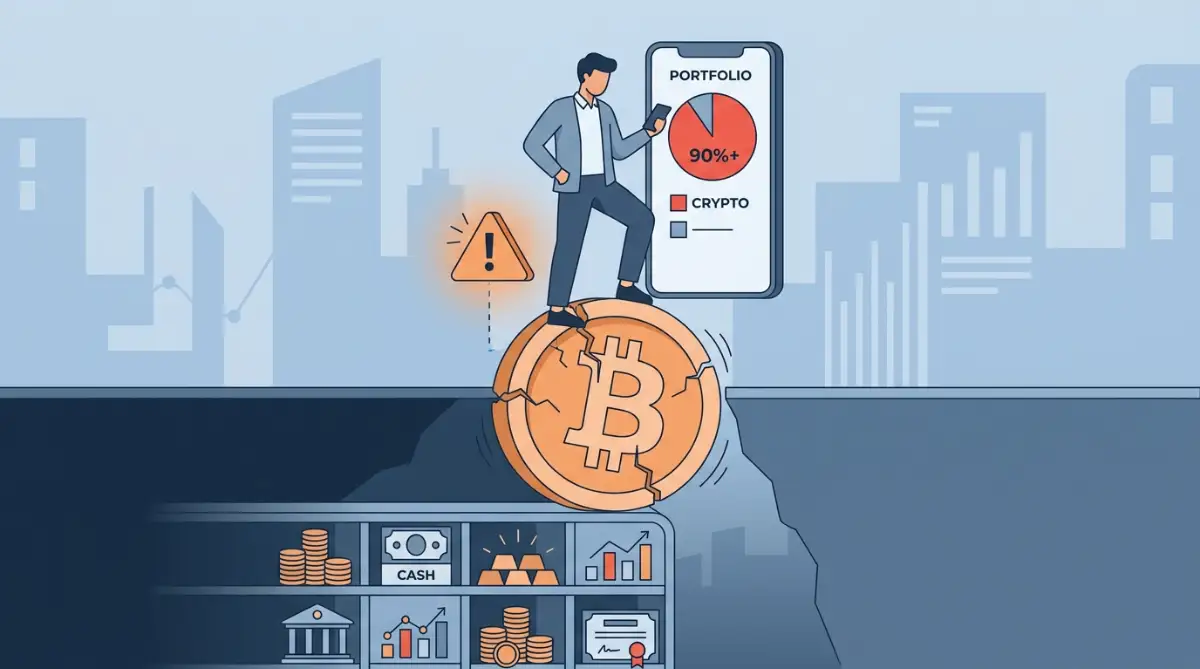
Risk management starts with understanding how much of your overall investment capital should be allocated to digital assets. Many experienced investors avoid placing all of their wealth into a single asset class.
Within your crypto portfolio, you can further reduce risk by:
- Avoiding excessive concentration in one cryptocurrency
- Maintaining diversification across sectors
- Holding sufficient emergency savings outside crypto
- Keeping realistic expectations about future growth
- Reviewing investments based on facts rather than market excitement
Managing risk consistently often produces better long-term outcomes than constantly chasing the highest possible returns.
Protect Your Investments with Strong Security Habits
Growing a crypto portfolio means little if your assets are not properly protected.
Security should be treated as an essential part of every investment strategy rather than an optional step.
Some practical security habits include:
Use Strong and Unique Passwords
Each exchange, wallet, and investment platform should have its own strong password. Reusing passwords across multiple accounts increases the risk of unauthorized access.
Enable Multi-Factor Authentication
Whenever available, activate multi-factor authentication. This provides an additional layer of security beyond a password.
Be Cautious with Links and Messages
Scammers frequently impersonate exchanges, wallet providers, and well-known cryptocurrency projects.
Before clicking any link:
- Verify the website address carefully.
- Avoid downloading unknown files.
- Never share recovery phrases or private keys.
- Ignore messages requesting urgent action without verification.
Store Recovery Information Securely
Wallet recovery phrases should be stored safely offline where only authorized individuals can access them.
Losing recovery information may permanently prevent access to your digital assets.
Understand Market Cycles Without Trying to Predict Every Move
Financial markets generally move through different phases over time.
The cryptocurrency market experiences periods of:
- Expansion
- Consolidation
- Increased volatility
- Market corrections
- Recovery
Recognizing these cycles can help investors remain patient.
However, attempting to predict every market movement usually results in unnecessary stress.
Long-term investing focuses less on forecasting short-term prices and more on evaluating whether quality projects continue progressing over time.
Patience often becomes one of the most valuable investment skills.
Keep Learning as the Industry Evolves
Blockchain technology changes rapidly.
New developments regularly appear in areas such as:
- Layer-two scaling
- Decentralized finance
- Tokenization
- Digital identity
- Privacy technologies
- Cross-chain interoperability
- Real-world asset integration
Continuous learning helps investors understand emerging opportunities while recognizing potential risks.
Reliable educational sources include:
- Official project documentation
- Developer updates
- Academic research
- Reputable blockchain publications
- Educational conferences and webinars
Avoid relying exclusively on social media opinions or viral predictions.
Build an Investment Journal
One of the simplest yet most effective habits is maintaining an investment journal.
Document details such as:
- Why you purchased an asset
- Expected holding period
- Risk assessment
- Research sources
- Lessons learned
- Portfolio changes
Over time, this journal becomes a valuable learning resource.
Reviewing previous decisions often reveals emotional patterns that may otherwise go unnoticed.
Investors who document their reasoning generally improve decision-making because they evaluate choices objectively instead of relying on memory.
Common Habits That Can Weaken a Long-Term Portfolio
Even well-intentioned investors sometimes develop habits that reduce long-term performance.
Some of the most common mistakes include:
Chasing Popular Trends
Buying an asset simply because it has become popular can expose investors to unnecessary risk.
Always perform independent research before investing.
Ignoring Diversification
Holding too much of one cryptocurrency increases portfolio concentration risk.
Diversification helps reduce dependence on a single project's success.
Trading Too Frequently
Constant buying and selling often increases transaction costs and encourages emotional decisions.
Long-term investing usually benefits from patience and consistency.
Neglecting Security
Weak passwords, poor account protection, and unsafe browsing habits can expose investments to avoidable threats.
Security should remain a priority regardless of portfolio size.
Investing Without a Plan
Random investment decisions rarely produce consistent long-term results.
Having written investment objectives helps maintain discipline during changing market conditions.
Measure Success Beyond Portfolio Value
Many investors judge success only by the total value of their portfolio.
While investment growth is important, long-term success also includes:
- Improved financial knowledge
- Better risk management
- Strong investment discipline
- Consistent research habits
- Emotional control during volatility
- Increased understanding of blockchain technology
These skills continue providing value regardless of short-term market performance.
Build Patience Into Your Investment Strategy
Patience is often underestimated.
Technology adoption, infrastructure development, and blockchain innovation require time.
Short-term price movements may not accurately reflect long-term progress.
Instead of focusing solely on daily price charts, evaluate broader indicators such as:
- Network activity
- Developer participation
- Ecosystem growth
- Community engagement
- Real-world applications
- Long-term adoption trends
Viewing investments through a wider perspective encourages more rational decision-making.
Stay Flexible Without Constantly Changing Direction
A successful strategy remains consistent while allowing reasonable adjustments when circumstances change.
For example, you may update your portfolio if:
- A project's fundamentals deteriorate.
- Security concerns become significant.
- Better diversification opportunities emerge.
- Your personal financial goals change.
- Your risk tolerance evolves.
Flexibility should be based on careful research rather than temporary market emotions.

Responsible Investing Creates Better Long-Term Results
Responsible investing means understanding both opportunities and risks.
Rather than expecting guaranteed profits, informed investors recognize that cryptocurrency remains a developing asset class with uncertainty.
Responsible investors typically:
- Conduct independent research.
- Verify information from multiple sources.
- Invest gradually.
- Maintain realistic expectations.
- Diversify appropriately.
- Protect account security.
- Continue learning throughout their investment journey.
These habits create a stronger foundation for long-term portfolio management.
Looking Ahead with Confidence
Building a long-term crypto portfolio is less about finding the next popular digital asset and more about creating a disciplined investment process that can withstand changing market conditions. The most resilient portfolios are supported by thoughtful planning, ongoing education, balanced diversification, effective security practices, and consistent risk management.
No strategy can eliminate market volatility, but a structured approach can help reduce emotional decision-making and improve the quality of investment choices over time. By focusing on research, patience, and continuous improvement, investors place themselves in a stronger position to navigate both opportunities and challenges within the cryptocurrency ecosystem.
Remember that investing is a journey of learning as much as it is a financial commitment. Every well-informed decision contributes to building greater confidence, stronger knowledge, and a portfolio designed with long-term sustainability in mind.
Disclaimer
This article is intended for educational and informational purposes only and should not be considered financial, investment, legal, or tax advice. Cryptocurrency investments involve significant risks, including the potential loss of capital. Always conduct your own research, evaluate your financial situation, and consider consulting a qualified financial professional before making investment decisions. Past performance does not guarantee future results.