A Beginner's Guide to Surviving Your First Market Crash
The first crypto market crash can feel overwhelming. One day your portfolio looks promising, and the next day prices seem to fall without stopping. For many beginners, this is the moment when excitement turns into fear.
Watching investments lose value within hours can trigger emotional decisions. Some investors panic and sell everything. Others continue buying random coins without a plan. Both reactions are often driven by emotion rather than knowledge.
The good news is that market crashes are not unusual in cryptocurrency. They have happened many times before, and experienced investors understand that volatility is part of the journey. While no one can predict exactly when prices will rise or fall, you can prepare yourself to make better decisions when the market becomes unstable.
This guide explains what a crypto market crash is, why it happens, how it affects investors, and the practical steps beginners can take to stay calm and make informed choices.
Understanding What a Crypto Market Crash Really Means
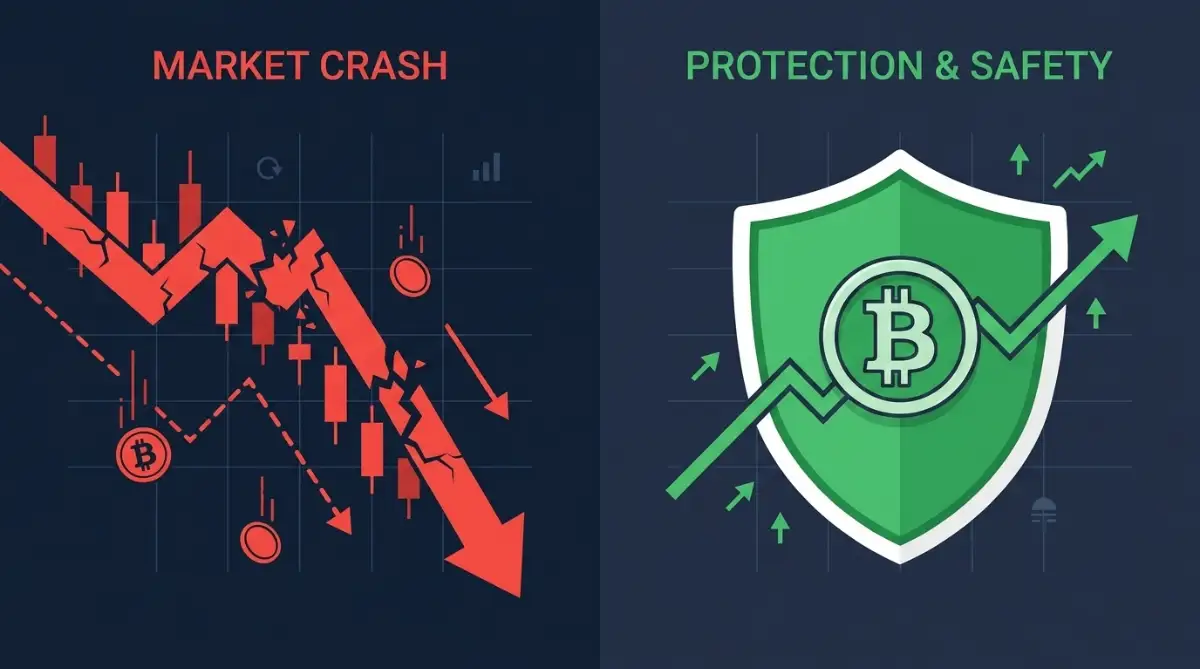
A market crash is a rapid and significant decline in the prices of cryptocurrencies across the market. It often happens within a short period and affects both large and small digital assets.
Unlike traditional financial markets, cryptocurrency trades around the clock. This means prices can change dramatically at any hour of the day.
A crash does not necessarily mean that cryptocurrency has failed. Instead, it reflects changing market sentiment, economic conditions, investor behavior, or unexpected events.
Some common causes include:
- Global economic uncertainty
- Negative regulatory announcements
- Security breaches affecting major platforms
- Large-scale investor selling
- High market speculation
- Fear spreading through social media
Understanding these factors helps beginners realize that price declines are often driven by multiple influences rather than a single event.
Why Your Emotions Become Your Biggest Challenge
One of the hardest parts of investing is controlling emotions.
When prices fall quickly, the human brain naturally reacts with fear. Investors begin questioning every decision they have made.
Common emotional reactions include:
Fear of Losing Everything
Many beginners believe that every price drop means their investment will disappear forever. This fear often leads to panic selling at the worst possible moment.
Fear of Missing Out
Ironically, crashes can also create the opposite emotion. Investors may rush to buy because they think prices cannot fall further.
Buying without research can create additional losses if the market continues declining.
Regret
Some investors blame themselves for buying near the top of the market.
While this feeling is understandable, nearly every experienced investor has entered the market at imperfect times.
Learning from mistakes is far more valuable than dwelling on them.
Why Crypto Markets Are Naturally Volatile
Cryptocurrency is still considered a relatively young asset class compared to traditional investments.
Several characteristics contribute to its price volatility:
Smaller Market Size
Compared to traditional financial markets, cryptocurrency has less overall capital. Large buy or sell orders can therefore move prices more dramatically.
Constant Trading
Crypto markets never close.
Unlike stock exchanges that have opening and closing hours, cryptocurrency trading continues every day without interruption.
Investor Psychology
News spreads quickly online.
Positive headlines can trigger rapid buying, while negative headlines can encourage widespread selling.
Innovation and Uncertainty
Blockchain technology continues evolving.
New projects appear regularly, regulations change, and technological improvements influence investor expectations.
Common Mistakes Beginners Make During Their First Crash
Learning what not to do is just as important as learning what to do.
Panic Selling
Selling simply because prices are falling often locks in losses that might have recovered later.
Although every situation is different, emotional selling rarely follows a well-planned investment strategy.
Checking Prices Every Few Minutes
Constantly refreshing your portfolio increases stress and anxiety.
Short-term price movements rarely provide useful information for long-term investors.
Following Social Media Rumors
During crashes, misinformation spreads quickly.
Always verify information through reliable sources before making financial decisions.
Ignoring Risk Management
Investing more money than you can comfortably afford to lose creates unnecessary emotional pressure.
Responsible investing begins with realistic expectations.
Practical Steps to Stay Calm During Market Volatility
Remember Why You Invested
Ask yourself why you entered cryptocurrency.
Was it because you believed in blockchain technology?
Were you investing for long-term growth?
Returning to your original goals helps reduce emotional reactions.
Review Your Investment Plan
Every investor should have a simple plan before buying any asset.
Your plan may include:
- Investment goals
- Risk tolerance
- Time horizon
- Portfolio allocation
- Exit strategy
When markets become unstable, following a prepared plan is often better than reacting emotionally.
Avoid Emotional Decisions
Strong emotions rarely produce strong investment decisions.
If you feel overwhelmed, consider waiting before making major changes to your portfolio.
Even a short pause allows you to evaluate the situation more objectively.
Focus on Learning
Every market cycle teaches valuable lessons.
Instead of asking, "Why is this happening?"
Ask:
"What can I learn from this experience?"
This mindset transforms setbacks into opportunities for personal growth.
Building Healthy Investment Habits
Successful investing depends more on consistency than excitement.
Consider developing habits such as:
Continue Learning
Read educational resources about:
- Blockchain technology
- Market cycles
- Portfolio management
- Risk management
- Investor psychology
Knowledge reduces uncertainty.
Diversify Carefully
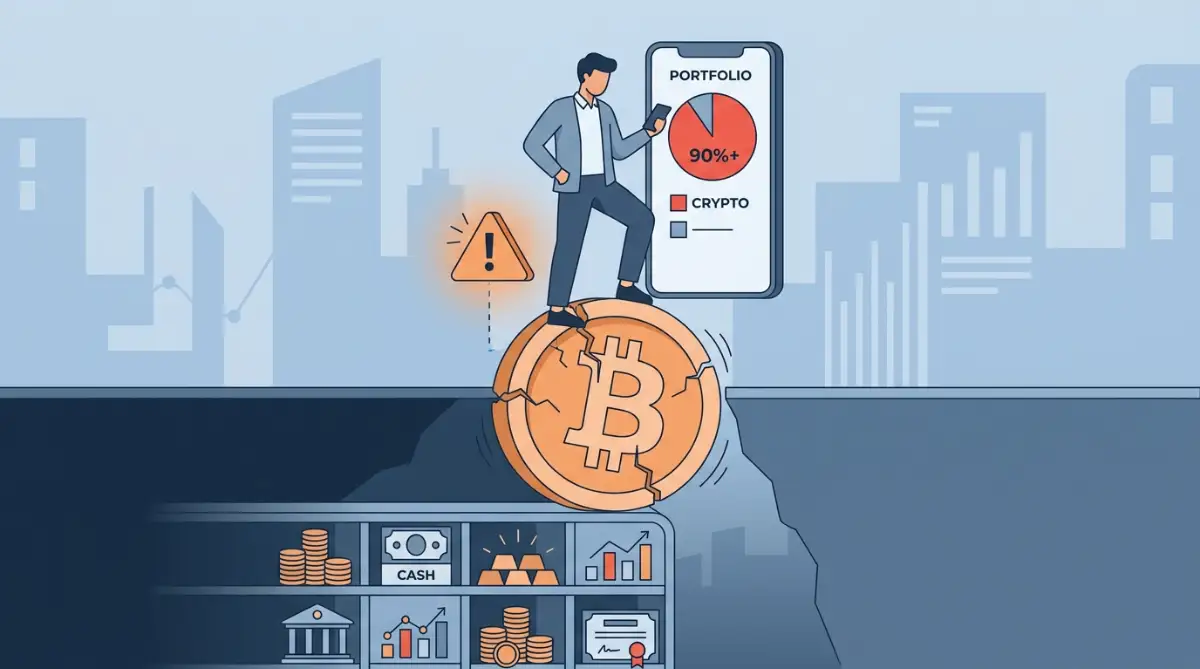
Although diversification cannot eliminate risk, relying on only one investment increases exposure.
A balanced approach may help reduce the impact of extreme price movements.
Keep Realistic Expectations
Cryptocurrency can experience significant gains, but it can also experience substantial declines.
Expecting only positive returns creates unrealistic assumptions.
Healthy investing accepts both opportunities and risks.
Understanding the Difference Between Price and Value
Many beginners confuse price with value.
Price is simply what the market currently pays.
Value represents the long-term usefulness, adoption, and potential of an asset.
Short-term prices often move much faster than long-term value.
Learning this difference helps investors avoid reacting to every daily fluctuation.
How Experienced Investors Often Think Differently
Experienced investors generally understand that market declines are part of investing.
Rather than asking whether prices will always go up, they focus on questions such as:
- Has the technology fundamentally changed?
- Has my investment goal changed?
- Has my risk tolerance changed?
- Am I following my strategy?
These questions encourage thoughtful decisions instead of emotional reactions.
The Importance of Risk Management
Risk management is not about avoiding every loss.
It is about protecting yourself from losses that become financially or emotionally overwhelming.
Good risk management may include:
Invest Only What You Can Afford to Lose
Never invest money needed for:
- Rent
- Food
- Emergency expenses
- Essential bills
Financial security should always come first.
Keep an Emergency Fund
Separate emergency savings from investment funds.
This reduces the pressure to sell investments during temporary market declines.
Avoid Excessive Leverage
Borrowing money to invest increases potential gains but also increases potential losses.
For beginners, understanding investment basics before exploring complex strategies is generally the safer approach.
Creating a Long-Term Mindset
Many successful investors view cryptocurrency as a long-term learning journey rather than a short-term competition.
Long-term thinking encourages patience.
Instead of focusing on today's price movement, consider broader questions:
- Is blockchain adoption increasing?
- Are developers continuing to build new applications?
- Is innovation continuing?
These larger trends often matter more than daily market fluctuations.
Questions Every Beginner Should Ask During a Crash
Instead of reacting emotionally, pause and ask yourself:
- Why are prices falling?
- Has anything fundamentally changed?
- Am I following my investment plan?
- Am I making decisions based on facts or emotions?
- What lesson can I take from this experience?
These questions encourage thoughtful analysis rather than panic.
How to Continue Growing as an Investor
Every experienced investor was once a beginner.
Improvement comes through continuous learning and disciplined decision-making.
Consider maintaining an investment journal.
Record:
- Why you bought an asset
- Your expectations
- Market conditions
- Lessons learned
Over time, this record becomes an excellent learning resource.
You may notice emotional patterns that can be improved before future market cycles.
Turning a Difficult Market Into a Valuable Learning Experience
Surviving your first market crash is only the beginning. What truly shapes your future as an investor is how you respond after the initial fear begins to fade. Some people leave the market with frustration, while others use the experience to build stronger habits, improve their decision-making, and develop a healthier relationship with investing.
The difference is rarely about intelligence or luck. More often, it comes down to preparation, patience, and the willingness to learn from mistakes.
This section explores practical ways to strengthen your investment mindset, improve your risk management approach, and prepare for future periods of market volatility.
Build an Investment Process Instead of Following Emotions
Many beginners enter the cryptocurrency market without a structured process. They rely on social media trends, online discussions, or sudden price movements to decide when to buy or sell.
A better approach is to create a repeatable investment process.
Your personal process might include:
- Researching a project before investing.
- Understanding how the blockchain or protocol works.
- Reviewing the project's use case.
- Evaluating potential risks.
- Setting realistic expectations before investing.
- Recording the reason behind every investment decision.
Following a consistent process helps reduce impulsive decisions during periods of uncertainty.
Learn to Separate Market Noise From Useful Information
The cryptocurrency industry generates an enormous amount of content every day.
News articles, videos, podcasts, social media posts, and online communities often provide conflicting opinions.
Not every headline deserves your attention.
When evaluating new information, ask yourself:
- Is the source reliable?
- Does the information include evidence?
- Is the headline designed to educate or simply attract clicks?
- Does this news actually change the long-term outlook?
Developing critical thinking skills can protect you from emotional reactions caused by misleading information.
Strengthen Your Risk Management Framework
Risk management is an ongoing habit rather than a one-time decision.
Consider reviewing your portfolio periodically by asking questions such as:
Does My Portfolio Match My Risk Tolerance?
Investment goals change over time.
If market volatility keeps you awake at night, your portfolio may contain more risk than you're comfortable with.
Adjusting your investment strategy to match your comfort level can help reduce unnecessary stress.
Am I Overexposed to One Asset?
Concentrating too much of your portfolio in a single cryptocurrency increases potential risk.
Diversification cannot eliminate losses, but it may reduce the impact of one asset performing poorly.
Do I Have Enough Financial Stability Outside My Investments?
A healthy financial foundation often includes:
- Emergency savings
- Stable income
- Responsible budgeting
- Minimal unnecessary debt
Strong personal finances make it easier to remain patient during market downturns.
Recognize the Different Stages of Market Psychology
Market prices are influenced by human behavior.
Although every market cycle is different, investors often experience similar emotional stages.
These may include:
Optimism
Investors believe prices will continue rising.
Excitement
Positive news encourages more participation.
Confidence
Many investors become comfortable taking larger risks.
Anxiety
Prices begin to fluctuate more dramatically.
Fear
Selling pressure increases.
Panic
Some investors sell simply to avoid additional losses.
Acceptance
Emotions begin to stabilize.
Understanding these emotional stages helps investors recognize their own reactions before making important decisions.

Create Realistic Expectations About Recovery
One common misconception is that every market recovery happens quickly.
In reality, recovery timelines vary significantly.
Markets may recover rapidly, gradually, or experience extended periods of sideways movement before establishing a new trend.
Patience often becomes one of an investor's most valuable qualities.
Rather than trying to predict exact recovery dates, focus on improving your investment knowledge and maintaining disciplined decision-making.
Protect Yourself From Emotional Decision Fatigue
Making investment decisions while experiencing stress can reduce judgment.
Some practical ways to minimize emotional fatigue include:
- Limiting how often you check portfolio prices.
- Taking breaks from financial news when feeling overwhelmed.
- Following a predefined investment plan.
- Reviewing investments at scheduled intervals instead of reacting constantly.
A calmer mind often produces better long-term decisions.
Continue Improving Your Financial Education
The cryptocurrency ecosystem evolves continuously.
Learning should remain an ongoing habit.
Topics worth exploring include:
Blockchain Fundamentals
Understanding how blockchain technology works provides context beyond price charts.
Digital Asset Security
Learning safe storage practices helps protect your investments from avoidable risks.
Portfolio Allocation
Understanding asset allocation supports balanced investment decisions.
Macroeconomic Factors
Global economic conditions can influence cryptocurrency markets.
Expanding your knowledge across multiple financial topics creates a more complete perspective.
Develop Healthy Online Habits
Many investment decisions are influenced by online communities.
While these communities can provide valuable educational discussions, they can also amplify fear and excitement.
Healthy digital habits include:
- Following educational creators instead of sensational content.
- Avoiding emotionally charged discussions during volatile markets.
- Verifying claims before accepting them as facts.
- Recognizing that anonymous opinions may not reflect reliable expertise.
Remember that popularity does not automatically equal accuracy.
Understand That Every Investor Has Different Goals
Comparing your portfolio to someone else's rarely provides useful information.
Some investors seek long-term growth.
Others focus on learning blockchain technology.
Some prioritize capital preservation.
Others accept higher levels of risk.
Your investment decisions should align with your own financial goals rather than someone else's strategy.
Improve Your Decision-Making With Written Notes
Writing down your investment decisions offers several advantages.
Before making an investment, record:
- Why you're interested in the project.
- Your expectations.
- Potential risks.
- Your planned holding period.
- Conditions that might cause you to reassess your investment.
Reviewing these notes later can reveal patterns in your thinking and improve future decisions.
Focus on Progress Rather Than Perfection
Every investor makes mistakes.
The goal is not to eliminate mistakes entirely.
Instead, focus on making fewer emotional decisions over time.
Progress may include:
- Conducting better research.
- Managing risk more effectively.
- Remaining calm during volatility.
- Learning from previous experiences.
Small improvements accumulate into stronger investing habits.
Warning Signs That You May Need to Reevaluate Your Strategy
It may be helpful to reassess your approach if you notice any of the following:
- Constant anxiety about market prices.
- Investing based solely on online hype.
- Ignoring your original investment plan.
- Taking risks that exceed your comfort level.
- Frequently changing strategies without research.
Recognizing these warning signs early allows you to make thoughtful adjustments before problems become larger.
Valuable Lessons That Every Market Crash Can Teach
Although market declines can be uncomfortable, they often provide valuable education.
A market crash can teach you:
- The importance of patience.
- The value of proper research.
- Why emotional discipline matters.
- How risk management protects long-term goals.
- Why financial education never truly ends.
These lessons often remain useful throughout an investor's entire journey.
Preparing Yourself for Future Market Cycles
No one knows exactly when the next major market movement will occur.
Instead of trying to predict every price change, focus on becoming better prepared.
Consider regularly reviewing:
- Your investment goals.
- Your financial situation.
- Your portfolio allocation.
- Your learning progress.
- Your emotional reactions during previous market events.
Preparation creates confidence, even when markets remain uncertain.
Moving Forward With Greater Confidence
Your first crypto market crash is not simply a financial event—it is also an educational milestone. While falling prices can feel discouraging, they often provide some of the most important lessons about patience, discipline, and responsible investing.
Successful investors are not defined by avoiding every downturn. They are defined by their ability to continue learning, manage risk thoughtfully, and make informed decisions without allowing fear or excitement to take control. By focusing on continuous education, maintaining realistic expectations, and following a structured investment process, you can gradually build the confidence needed to navigate future market cycles with greater clarity.
Every market cycle offers new opportunities to improve your knowledge and strengthen your decision-making skills. The habits you develop today can become the foundation for a more informed, balanced, and resilient investment journey in the future.
Disclaimer
This article is intended for educational and informational purposes only and should not be considered financial, investment, legal, or tax advice. Cryptocurrency investments involve significant risk, and market prices can be highly volatile. Always conduct your own research, evaluate your financial situation, and consider consulting a qualified financial professional before making any investment decisions. Past market performance does not guarantee future results.