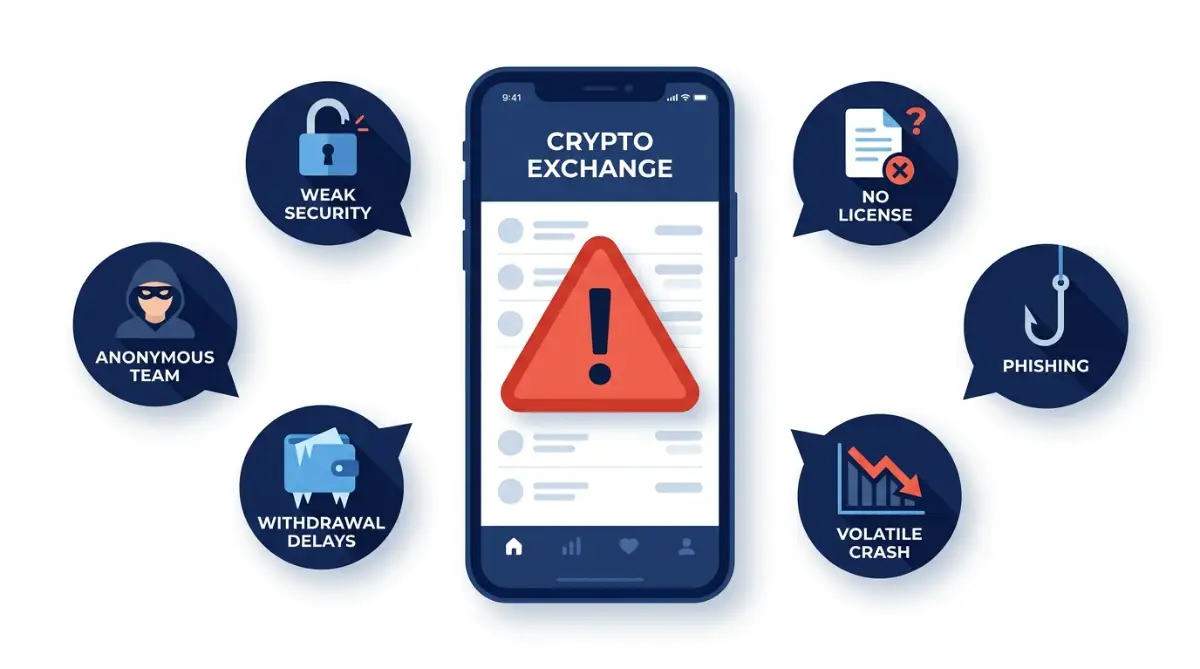
Seven Warning Signs Your Crypto Exchange Might Not Be Safe
Cryptocurrency has changed the way a lot of people think about money, investing, and financial freedom. Millions of users buy, sell, and store digital assets every day on online cryptocurrency exchanges. While plenty of exchanges take security seriously and do things the right way, others can leave users exposed to unnecessary risks because of weak security, poor transparency, or shaky management.
If you're new to crypto, picking an exchange often comes down to convenience, cool features, or low fees. But those things alone don't mean a platform is trustworthy or secure. A polished website, slick marketing, or big promotions can't make up for weak security or unclear business practices.
Knowing what warning signs to look for can help you avoid losses and make smarter choices. This guide walks through some of the most common signs that a crypto exchange may not be as safe as it looks, plus a few practical steps you can take to protect yourself.
Why Crypto Exchange Security Matters
Unlike traditional banks, cryptocurrency transactions are usually irreversible. If your funds get stolen or sent to the wrong address, getting them back can be really tough.
Since exchanges often hold huge amounts of digital assets, they’re a big target for hackers, scammers, and other cybercriminals. Even major platforms have had security incidents in the past, which is why it’s so important to think carefully about where you keep your assets.
Security shouldn’t be treated like a nice extra. It should be one of the first things you look at before signing up or depositing money.
Warning Sign One: Limited Transparency About the Company
One of the first things to check is whether the exchange is open about its business.
Good exchanges usually share details like:
- Company registration
- Physical business address
- Leadership team
- Customer support channels
- Legal policies
- Privacy policy
- Terms of service
If basic company info is hard to find or seems hidden on purpose, that’s a red flag worth paying attention to.
Transparency doesn’t automatically mean a platform is safe, but when a company hides information, it becomes a lot harder to judge whether it’s legit.
Questions to Ask
- Who owns the exchange?
- Where is the company registered?
- Can you actually reach customer support?
- Are the legal documents easy to find?
If you can’t get clear answers to these questions, it’s probably worth doing more digging before putting any money in.
Warning Sign Two: Weak Account Security Features
Strong account security is a must if you want to protect your digital assets.
A trustworthy exchange should give you several security options you can turn on right after creating your account.
Useful security features include:
- Two-factor authentication (2FA)
- Login notifications
- Device management
- Withdrawal confirmation
- Anti-phishing codes
- Biometric login support on mobile devices
If an exchange only uses a username and password and doesn’t offer anything else, your account could be at a much higher risk.
Why Two-Factor Authentication Matters
Passwords alone just aren’t enough anymore. If your password gets exposed through phishing or a data breach, two-factor authentication gives you an extra layer of protection that makes it much harder for someone to break in.
Warning Sign Three: Poor Reputation Among Users
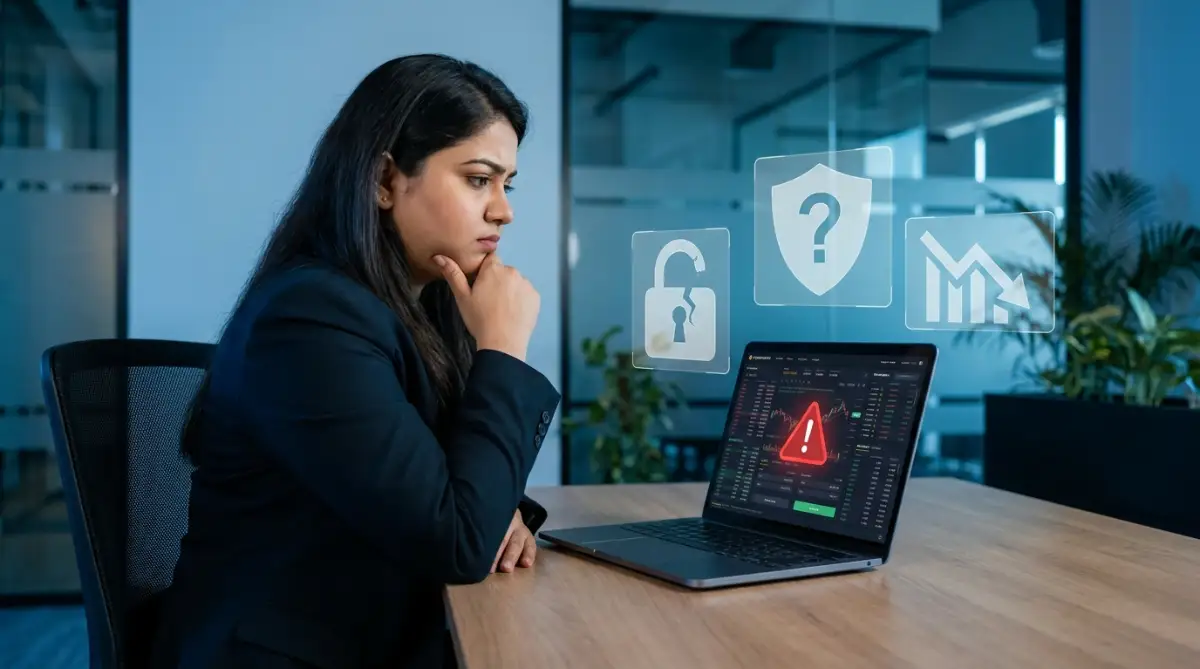
Before you use any exchange, take some time to look up what real users are saying.
Every platform gets a few complaints now and then, but if you keep seeing the same problems over and over, that’s something to take seriously.
Common complaints include:
- Frozen withdrawals
- Delayed customer support
- Missing funds
- Account lockouts
- Unexplained verification problems
- Frequent technical failures
Try not to rely only on promotional reviews. Check feedback from different sources so you can get a more balanced picture of how reliable the platform really is.
Be Careful With Online Reviews
Not every review online is real. Some are overly positive because they’re promotional, while others may be fake in the opposite direction.
Instead of trusting one review, compare opinions from different communities and look for repeated patterns rather than one-off comments.
Warning Sign Four: Unrealistic Promises and Aggressive Marketing
Good exchanges usually focus on secure trading, not wild promises.
Be careful if a platform keeps pushing claims like:
- Guaranteed profits
- Risk-free investing
- Instant wealth
- Extremely high daily returns
- Secret investment strategies
Crypto markets are naturally volatile. No real exchange can promise investment results.
If a platform uses aggressive marketing and makes unrealistic money claims, it may care more about getting deposits than helping users make informed decisions.
Always keep in mind that bigger returns usually come with bigger risks.
Warning Sign Five: Unclear Security Practices
Trustworthy exchanges usually explain how they protect customer funds.
Common security practices include:
- Cold wallet storage
- Encryption
- Multi-signature wallets
- Continuous security monitoring
- Regular security audits
- Risk management systems
If an exchange barely says anything about how it protects user assets, that lack of clarity should make you do more research.
Companies don’t need to reveal every technical detail, but they should still give a clear overview of how they keep customer funds safe.
What Is Cold Storage?
Cold storage means keeping cryptocurrency offline instead of on internet-connected systems.
Because offline wallets are much harder for hackers to reach remotely, cold storage is one of the most common security practices in the crypto world.
Warning Sign Six: Frequent Technical Problems
Reliable exchanges invest in stable systems.
If users are constantly dealing with things like:
- Website outages
- Failed logins
- Unexpected maintenance
- Slow withdrawals
- Trading interruptions
- Mobile app crashes
then those issues can affect both convenience and security.
A little maintenance here and there is normal for any online service, but repeated technical problems can create real risks when the market is moving fast.
Imagine needing to get into your account during a big price swing and finding the exchange down. That kind of situation can be stressful and expensive.
Warning Sign Seven: Poor Customer Support
Customer support matters a lot when you're dealing with financial accounts.
Ask yourself:
- Can you reach support easily?
- Does the exchange offer more than one way to contact them?
- Are the help articles actually useful?
- Do they respond in a professional and timely way?
If users keep saying support tickets go unanswered for a long time, fixing urgent account issues can become a lot harder.
Good customer service won’t prevent every problem, but it can make solving issues much faster and less frustrating.
Additional Factors Worth Evaluating
Security is about more than just avoiding the obvious warning signs.
Before choosing an exchange, also think about:
Regulatory Compliance
Some exchanges operate under financial regulations depending on where they’re based.
Knowing whether a platform follows the rules that apply to it can give you a bit more confidence, though regulation alone doesn’t remove all risk.
Proof of Asset Management
Some exchanges choose to share information about reserves or go through independent reviews to be more transparent.
The approach varies from platform to platform, but more openness usually helps users make better decisions.
Educational Resources
Reliable exchanges often offer educational content that covers things like:
- Cryptocurrency basics
- Security best practices
- Fraud prevention
- Responsible investing
Platforms that help educate users often make the crypto space safer for everyone.
Practical Tips for Staying Safe
Even if you pick a solid exchange, your own security habits still matter a lot.
Here are some good habits to follow:
- Turn on two-factor authentication right away.
- Use a strong, unique password.
- Don’t reuse passwords across different sites.
- Watch out for phishing emails and fake websites.
- Double-check website addresses before logging in.
- Never share your account details.
- Keep your devices updated.
- Check your account activity regularly.
- Move long-term holdings to a personal wallet when it makes sense.
- Learn the basics of cybersecurity.
Small habits like these can go a long way in lowering your risk online.
Common Misconceptions About Crypto Exchange Safety
A lot of beginners assume certain things automatically mean a platform is safe. In reality, those assumptions can be pretty misleading.
"A Popular Exchange Is Always Safe"
Popularity doesn’t guarantee perfect security.
Even big companies are constantly dealing with new cybersecurity threats.
"High Trading Volume Means Zero Risk"
High trading volume may mean good liquidity, but it doesn’t wipe out operational or security risks.
"My Password Is Strong Enough"
Strong passwords are important, but they’re even better when paired with two-factor authentication.
"Hackers Only Target Large Investors"
Cybercriminals go after accounts of all sizes.
Every crypto account deserves proper protection, no matter how big the balance is.
Building a Security-First Mindset
Successful crypto investing isn’t just about picking the right coins.
It’s also about protecting what you own by making smart choices.
Instead of rushing to sign up because of ads or social media hype, take your time and research each platform carefully.
Ask questions, compare features, check security practices, and learn how the exchange handles customer protection.
Building these habits early can help you avoid mistakes and feel more confident in the crypto world.
How to Research a Crypto Exchange Before Creating an Account
A lot of security headaches can be avoided just by taking a little extra time to look into an exchange before you sign up. No platform can remove every risk, but doing your homework helps you make decisions based on real facts instead of marketing hype.
Start with the exchange’s official website. Check out the About page, Terms of Service, Privacy Policy, and Security section. These pages can tell you a lot about how open the company is and whether it actually takes user protection seriously.
Then take a look at the platform’s Help Center or Knowledge Base. If the educational resources are clear and well organized, that’s usually a good sign the company cares about helping users, not just getting new signups.
It also helps to read independent news coverage about the exchange. Try to find balanced reporting instead of promotional pieces. If the exchange has had security issues before, pay attention to how it handled them. A company that communicates honestly, makes things right when it should, and improves its security practices usually shows a stronger commitment to earning trust over time.
Understanding the Difference Between Convenience and Security
A lot of beginners focus on convenience when picking an exchange. And sure, an easy-to-use platform matters, but convenience should never come at the expense of security.
For instance, automatic login, permanently trusted devices, or turning off security checks might save you a few seconds, but they can also make things riskier if your device gets lost or compromised.
A secure platform may sometimes ask for extra verification before withdrawals or major account changes. Those extra steps can feel annoying, but they’re often there to protect your funds.
Instead of seeing security features as a hassle, think of them as guardrails that help keep unauthorized people out.
How Phishing Attacks Target Crypto Users
One of the biggest threats crypto users face is phishing.
Phishing happens when attackers set up fake websites, emails, text messages, or social media accounts that look like real exchanges. Their goal is to trick people into giving up passwords, verification codes, or wallet details.
A few common warning signs include:
- Unexpected emails asking you to verify your account right away.
- Messages saying your account has been suspended.
- Links with slightly misspelled website addresses.
- Fake customer support reps reaching out to you first.
- Requests for passwords or authentication codes.
A real exchange should never ask for your password or two-factor authentication code through email or social media.
Always type the exchange’s official website address directly into your browser or use a bookmark you trust instead of clicking random links.
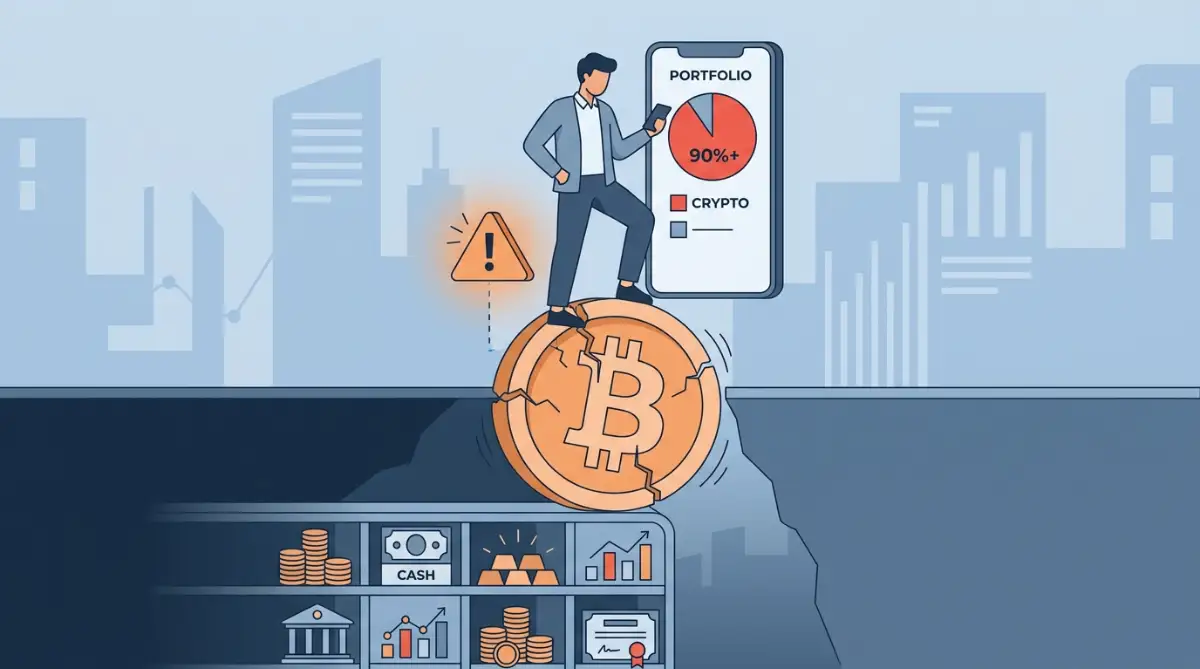
Why Diversification Can Reduce Risk
Diversification usually comes up when people talk about investing, but it matters for security too.
Keeping all of your digital assets on one exchange can leave you more exposed if that platform runs into technical problems, long outages, or a security incident.
Some experienced crypto users split up their holdings based on purpose. For example:
- Assets meant for active trading stay on an exchange.
- Long-term holdings may be kept in a personal wallet the user controls.
- Emergency funds stay easy to access without putting everything in one place.
This won’t remove risk completely, but it can lower the impact if one part of your setup fails.
Security Habits That Should Become Routine
Protecting your cryptocurrency is something you keep doing, not something you set up once and forget about.
Good habits include:
- Reviewing recent login history.
- Checking withdrawal records regularly.
- Updating passwords from time to time.
- Removing devices you no longer use.
- Keeping recovery information secure.
- Updating operating systems and apps.
- Locking devices with strong screen protection.
Simple routines can stop small mistakes from turning into bigger security problems.
Mistakes That Frequently Lead to Security Problems
A lot of crypto losses happen because of avoidable human mistakes, not because of some super advanced hack.
Some of the most common mistakes include:
Ignoring Security Settings
Some people create an account and jump straight into trading without turning on the security features that are available.
Take a few minutes to set up every security option the platform offers.
Using Public Wi-Fi for Sensitive Transactions
Public Wi-Fi can expose users to extra cybersecurity risks.
Whenever you can, access financial accounts using a trusted internet connection.
Sharing Too Much Information Online
Posting screenshots of balances, transaction history, or portfolio values can attract the wrong kind of attention.
Protecting your privacy is a big part of protecting your assets.
Falling for Urgency
Scammers love pressure tactics and often try to create a fake sense of urgency.
If you get a message saying your account will be permanently closed unless you act immediately, verify it through official support channels before doing anything.
Ignoring Software Updates
Security updates often include important fixes for newly discovered vulnerabilities.
Keeping your devices and apps updated helps reduce unnecessary exposure to cyber threats.
Frequently Asked Questions
Is every new crypto exchange unsafe?
No. New exchanges are not automatically unsafe. That said, newer platforms usually have a shorter track record, so doing thorough research matters even more.
Should I leave cryptocurrency on an exchange forever?
That depends on your needs, security preferences, and how you plan to use your assets. A lot of investors compare storage options based on convenience, access, and how much risk they’re comfortable with.
Does regulation guarantee complete safety?
No. Regulation can improve accountability in some cases, but it does not fully remove operational, cybersecurity, or market risks.
What should I do if I notice suspicious account activity?
Secure your account right away by changing your password, reviewing recent activity, turning on extra security features if they’re available, and contacting the exchange through its official support channels.
How often should I review my account security?
It’s a good idea to check your security settings regularly, especially after switching devices, updating contact info, or turning on new account features.
Developing Long-Term Confidence in Cryptocurrency
Learning about crypto security doesn’t happen overnight. As technology keeps changing, new security practices, scam tactics, and risk management strategies keep showing up too.
The most successful crypto users are often lifelong learners who keep improving their understanding of cybersecurity and responsible digital asset management.
Instead of reacting emotionally to headlines or social media buzz, focus on building a solid base of knowledge. The more informed your decisions are, the better prepared you’ll be to handle the changing crypto landscape responsibly.
Key Takeaways
Before trusting any cryptocurrency exchange, keep these basics in mind:
- Research the company thoroughly.
- Prioritize transparency over marketing.
- Enable every available security feature.
- Protect your personal information.
- Verify official communications carefully.
- Stay informed about cybersecurity best practices.
- Review your account regularly.
- Keep learning as the crypto ecosystem changes.
Security doesn’t come from one tool or feature alone. It comes from steady habits, careful research, and smart decision-making over time.
Closing Thoughts
Choosing a cryptocurrency exchange is one of the biggest decisions any digital asset investor makes. No platform can promise total protection from every possible threat, but spotting warning signs early and using responsible security practices can go a long way toward reducing unnecessary risk.
A smart approach to choosing an exchange goes beyond flashy interfaces, promo campaigns, or low fees. Trustworthy platforms usually show transparency, invest in user protection, communicate clearly, and encourage good security habits.
By combining careful research with strong personal cybersecurity habits, you can feel more confident in your crypto journey and make better decisions about where and how you manage your digital assets. Staying cautious, keeping up with what’s new, and checking your security practices regularly will always be useful habits in a digital financial world that keeps changing.
Disclaimer: This article is provided for educational and informational purposes only. It should not be considered financial, investment, legal, or cybersecurity advice. Cryptocurrency investments and digital asset storage involve risks. Always do your own research and consider your personal situation before making financial decisions or choosing a cryptocurrency exchange.