Understanding Blockchain Without the Technical Jargon
Blockchain has become one of the most talked-about technologies in the digital world. You may have heard about it while reading news about cryptocurrency, digital finance, cybersecurity, or even online voting. Unfortunately, many explanations are filled with technical words that make blockchain sound far more complicated than it really is.
The truth is that understanding blockchain does not require a computer science degree. Once the core idea is explained in everyday language, it becomes surprisingly easy to understand.
This guide explains blockchain from the ground up using simple examples, clear explanations, and practical insights. Whether you're curious about cryptocurrency, interested in technology, or simply want to understand what everyone is talking about, this article will help you build a strong foundation.
Why So Many People Find Blockchain Confusing
Most beginners stop learning about blockchain because they immediately encounter unfamiliar terms like cryptographic hashing, distributed consensus, smart contracts, mining, decentralization, and immutable ledgers.
While these concepts are important, they are not the best place to begin.
Imagine learning to drive by first studying how an engine is manufactured. It would only make the process harder.
Blockchain should be learned the same way. First understand the big picture. Then explore the technical details later if needed.
What Is Blockchain in Simple Words?
The easiest way to think about blockchain is as a shared digital notebook.
Instead of one person owning the notebook, thousands of people have identical copies.
Whenever someone writes a new page, everyone receives the same updated version.
Because everyone has a copy, nobody can secretly erase or change previous pages without everyone noticing.
That simple idea captures the heart of blockchain technology.
Rather than relying on one central authority to keep records, blockchain allows many participants to maintain the same trustworthy record together.
Understanding the Name "Blockchain"
The name itself explains how the technology works.
A blockchain consists of:
- Blocks
- Chain
A block is simply a collection of information.
Each block stores data such as transactions or digital records.
When one block becomes full, another block is created.
Every new block is securely connected to the previous one, creating a continuous chain of information.
That is why it is called a blockchain.
Each new block strengthens the history that came before it.
A Real-Life Example Anyone Can Understand
Imagine your classroom keeps track of attendance.
Normally, one teacher owns the attendance book.
If the book is lost or someone changes it, problems appear.
Now imagine every student has an identical attendance notebook.
Whenever attendance is recorded, everyone writes exactly the same information.
If one notebook suddenly says someone attended on a day they were absent, everyone else can immediately see the mistake because their copies do not match.
Blockchain works in a very similar way.
Instead of trusting one notebook, everyone helps protect the accuracy of the records.
What Makes Blockchain Different From Traditional Databases?
Traditional databases are usually controlled by one organization.
For example:
- A bank controls its banking database.
- A company controls its employee records.
- A school controls student information.
Blockchain works differently.
Instead of one organization managing everything, many computers share responsibility.
Every participant helps verify new information before it becomes permanent.
This shared responsibility improves transparency and reduces the need for complete trust in one central authority.
What Information Can Be Stored on a Blockchain?
Although blockchain became famous because of cryptocurrency, it can store many kinds of digital information.
Examples include:
- Financial transactions
- Digital ownership records
- Supply chain information
- Medical record references
- Educational certificates
- Property ownership records
- Digital identities
- Voting records in certain systems
The technology itself is flexible.
Its value comes from creating records that are difficult to alter after they have been verified.
How New Information Gets Added
Whenever new information is created, it does not immediately become part of the blockchain.
Instead, several steps happen.
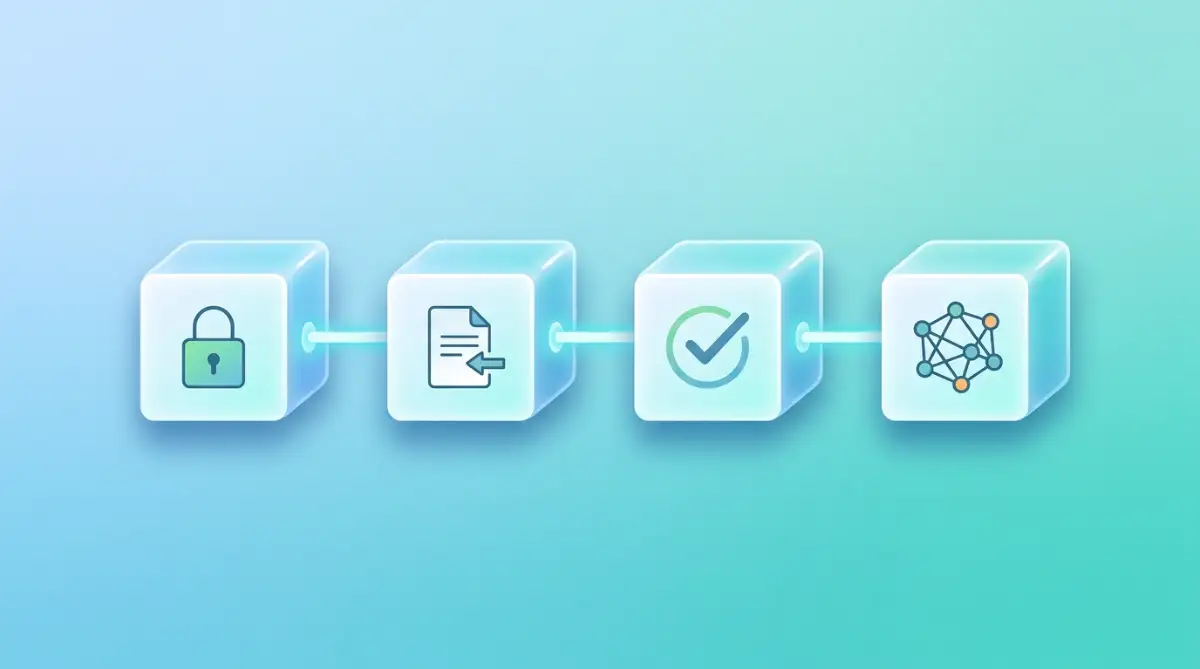
Step One: Information Is Created
Someone initiates a digital action.
This could be sending cryptocurrency, recording ownership, or updating another type of approved digital record.
Step Two: The Network Checks It
Computers connected to the blockchain examine whether the information follows the network's rules.
They verify that everything appears valid before accepting it.
Step Three: A New Block Is Formed
Verified information is grouped together into a block.
Think of this like filling one page of the shared notebook.
Step Four: The Block Joins the Chain
Once approved, the new block connects securely to previous blocks.
Everyone updates their copy.
The record becomes part of the permanent history.
Why Is Blockchain Considered Secure?
Security is one of blockchain's biggest strengths.
Several features work together to protect information.
Every Block Connects to Previous Blocks
Each block contains a digital connection to the block before it.
Changing one block would break those connections.
The network would quickly detect inconsistencies.
Many Copies Exist
Instead of one database existing in one location, blockchain records exist on many computers.
If one computer experiences problems, many others still contain accurate information.
Records Are Extremely Difficult to Change
Once information has been accepted by the network, changing it becomes extremely difficult because many participants share the same history.
This characteristic is often called immutability.
It does not mean change is mathematically impossible, but it does make unauthorized changes highly impractical on well-established blockchain networks.
What Does Decentralization Really Mean?
Decentralization sounds complicated, but the idea is simple.
Traditional systems often rely on one central organization making decisions and maintaining records.
Blockchain spreads responsibility across many participants instead.
Rather than placing complete trust in one organization, participants collectively help maintain the network.
This creates greater resilience because there is no single point where the entire system depends on one computer or organization.
Is Blockchain the Same as Cryptocurrency?
No.
This is one of the biggest misunderstandings.
Cryptocurrency uses blockchain technology, but blockchain has many applications beyond digital currencies.
A helpful comparison is this:
The internet allows people to send emails.
But the internet is much bigger than email.
Similarly, blockchain supports cryptocurrency, but it also supports many other digital applications.
Understanding this difference helps separate the technology from any specific investment or financial product.
Common Industries Exploring Blockchain
Blockchain technology continues to be explored across many sectors.
Finance
Banks and financial institutions study blockchain for faster payments and more efficient record management.
Healthcare
Medical organizations explore secure methods for sharing health records while protecting patient privacy.
Supply Chain
Companies can improve product tracking from manufacturing through delivery.
Education
Academic institutions can issue digital certificates that are easier to verify.
Government Services
Some governments explore blockchain for secure digital records and administrative processes.
Digital Identity
Blockchain may help individuals manage identity verification while reducing fraud in certain situations.
Common Myths About Blockchain
Myth: Blockchain Is Only for Experts
Reality:
Anyone can understand the basic concepts with simple explanations.
Myth: Blockchain Is Illegal
Reality:
Blockchain is simply a technology.
Laws and regulations vary depending on how it is used in different jurisdictions.
Myth: Everything on Blockchain Is Anonymous
Reality:
Many blockchain networks are transparent, meaning transactions can often be viewed publicly even if personal identities are not always directly displayed.
Myth: Blockchain Cannot Be Hacked
Reality:
Well-designed blockchain networks are highly secure, but no technology should be described as completely immune to every possible security risk.
Benefits of Blockchain
Blockchain offers several potential advantages.
These include:
- Improved transparency
- Better data integrity
- Reduced reliance on one central authority
- Strong security features
- Easier verification of records
- Greater resilience through distributed data storage
The importance of each benefit depends on how the technology is implemented.
Challenges and Limitations
Like every technology, blockchain also has limitations.
Some networks process transactions more slowly than traditional payment systems.
Energy usage varies depending on the blockchain design.
Legal regulations continue to evolve in many countries.
Not every business problem requires blockchain.
Sometimes traditional databases remain the better solution.
Understanding both strengths and limitations provides a more balanced perspective.
Why Blockchain Matters Beyond Cryptocurrency
Many people first hear about blockchain because of cryptocurrency news.
However, its broader importance lies in creating trusted digital records without requiring a single central authority to control everything.
As more organizations experiment with secure digital systems, blockchain continues to influence conversations around transparency, efficiency, accountability, and digital trust.
Even if someone never buys cryptocurrency, understanding blockchain helps them better understand many modern technologies and future digital services.
Public Blockchain vs. Private Blockchain
As you continue learning about blockchain, one important concept to understand is that not all blockchains operate in the same way. Different organizations have different needs, so blockchain systems can be designed with different levels of openness, privacy, and control.
The two most common categories are public blockchains and private blockchains.
What Is a Public Blockchain?
A public blockchain is open to everyone. Anyone with an internet connection can usually join the network, view publicly available records, and participate according to the network's rules.
Well-known cryptocurrency networks are examples of public blockchains, but public blockchain technology is also used for many other digital applications.
Some characteristics of public blockchains include:
- Open participation
- High transparency
- Decentralized governance
- Community-based validation
- Publicly accessible transaction history
Public blockchains are designed to prioritize openness and security, making them suitable for applications where transparency is especially important.
What Is a Private Blockchain?
A private blockchain is controlled by a specific organization or a limited group of participants.
Access is restricted, meaning only approved users can view or update information.
Businesses often choose private blockchains when handling confidential information or internal operations.
Common characteristics include:
- Permission-based access
- Faster processing in many cases
- Controlled participation
- Greater privacy
- Organizational management
Private blockchains are useful when complete public transparency is not appropriate.
Which One Is Better?
Neither type is universally better.
The right choice depends on the purpose.
For example, a public blockchain may be ideal for an open financial network, while a private blockchain may better suit a healthcare provider managing sensitive information.
Understanding these differences helps explain why blockchain is flexible enough for many industries.
Understanding Consensus Without Technical Complexity
One question naturally comes to mind.
If there is no single authority managing a blockchain, how does everyone agree on which information is correct?
The answer is something called consensus.
Consensus simply means reaching agreement.
Imagine several friends keeping score during a football match.
Instead of trusting only one person's notebook, everyone compares notes before agreeing on the final score.
Blockchain networks use their own methods to reach similar agreement before accepting new information.
Although different blockchain networks use different consensus models, the goal remains the same:
- Prevent false information
- Ensure fairness
- Keep records consistent
- Protect the network from unauthorized changes
You do not need to memorize technical names at this stage. Understanding the purpose of consensus is enough to build a solid foundation.
Why Transparency Matters
Transparency is one of blockchain's most valuable characteristics.
In traditional systems, users often have limited visibility into how records are managed.
Blockchain changes this by making many records easier to verify.
For many public blockchain networks:
- Transaction history can be viewed.
- Records can often be independently verified.
- Changes become easier to audit.
- Participants gain greater confidence in shared information.
Transparency does not necessarily mean revealing everyone's personal identity.
Instead, it often means making the integrity of information easier to verify.
How Blockchain Helps Reduce Fraud
Fraud usually succeeds when records can be secretly changed or manipulated.
Blockchain reduces this risk by creating shared records that are much harder to alter without detection.
Examples include:
- Digital ownership verification
- Supply chain tracking
- Payment verification
- Certificate authentication
- Identity validation
Although blockchain cannot eliminate every type of fraud, it provides tools that can make many forms of record tampering significantly more difficult.
Smart Contracts Explained in Plain English
Another popular blockchain term is smart contract.
Despite the name, it is not a paper contract.
A smart contract is simply a computer program that automatically performs specific actions when predefined conditions are met.
Imagine renting a storage locker.
Instead of waiting for an employee to unlock it, the door automatically opens after payment is successfully confirmed.
The rules were established beforehand, and the system follows them automatically.
Smart contracts operate in a similar way.
They help automate digital processes without requiring constant manual intervention.
Possible applications include:
- Insurance processing
- Digital agreements
- Membership verification
- Online marketplaces
- Business workflows
The exact implementation depends on the blockchain platform being used.
Real-World Examples Beyond Digital Currency
Many people associate blockchain only with cryptocurrency.
However, organizations continue exploring practical applications across many industries.
Supply Chain Tracking
Businesses can record each stage of a product's journey.
Customers may gain greater confidence about where products originated.
Healthcare
Medical providers may securely reference patient information while maintaining appropriate privacy controls.
Education
Educational institutions can issue certificates that employers can verify more easily.
Real Estate
Property ownership records may become easier to track and verify.
Logistics
Shipping companies can improve package tracking and documentation.
Charity Organizations
Donations can sometimes become easier to monitor through transparent recordkeeping.
These examples demonstrate that blockchain is a technology platform rather than a single product.
Common Misunderstandings Beginners Often Have
Learning blockchain becomes easier when you avoid common misconceptions.
Believing Blockchain Solves Every Problem
Blockchain is powerful, but it is not the best solution for every situation.
Traditional databases remain more practical for many applications.
Technology should always match the actual problem.
Assuming Every Blockchain Is Public
Many beginners think every blockchain allows anyone to participate.
In reality, organizations often build private or permissioned blockchain systems.
Confusing Blockchain With Cryptocurrency Prices
Blockchain technology and cryptocurrency market prices are separate topics.
Learning the technology does not require following investment markets.
Expecting Instant Adoption Everywhere
New technologies usually take time to integrate into existing systems.
Many organizations evaluate blockchain carefully before implementing it.
Practical Tips for Learning Blockchain Faster
If you want to build confidence, follow a gradual learning path instead of trying to master everything at once.
Learn the Core Vocabulary
Become familiar with terms like:
- Block
- Chain
- Ledger
- Network
- Wallet
- Transaction
- Node
- Consensus
Understanding these words makes future learning much easier.
Read Reliable Educational Sources
Focus on trustworthy educational materials rather than social media rumors or sensational headlines.
Reliable information helps you build accurate knowledge.
Practice Explaining Blockchain
One of the best ways to test your understanding is to explain blockchain to someone else using simple language.
If you can teach it without technical jargon, you probably understand the concept well.
Stay Curious
Blockchain continues to evolve.
Maintaining curiosity allows you to understand new developments without becoming overwhelmed.
Questions Beginners Frequently Ask
Does Blockchain Require Cryptocurrency?
No.
Many blockchain applications operate independently of digital currencies.
Is Blockchain Only Used in Finance?
No.
Healthcare, education, logistics, supply chain management, identity verification, and many other sectors are exploring blockchain solutions.
Can Blockchain Records Be Deleted?
In many blockchain systems, existing records are designed to remain permanent.
Corrections are generally handled by adding new records rather than deleting previous ones.
Does Blockchain Guarantee Complete Privacy?
Not necessarily.
Privacy depends on how a blockchain network is designed and managed.
Some prioritize transparency, while others emphasize restricted access.
Is Blockchain Difficult to Learn?
The technical details can become advanced, but the basic concepts are accessible to anyone willing to learn step by step.
Looking Ahead: The Future Potential of Blockchain
Blockchain continues to inspire innovation because it addresses an important challenge in the digital world: establishing trust between participants who may not know each other.
As technology develops, blockchain may continue supporting solutions involving:
- Digital identity
- Secure documentation
- Asset management
- Cross-border collaboration
- Transparent recordkeeping
- Business automation
- Secure data verification
The exact direction will depend on technological progress, regulations, and real-world adoption across industries.
Key Takeaways
If you remember only a few ideas from this guide, let them be these:
- Blockchain is a method of storing information securely across many computers.
- Blocks contain information, and each new block connects to previous ones.
- Shared records improve transparency and make unauthorized changes more difficult.
- Blockchain extends far beyond cryptocurrency.
- Public and private blockchains serve different purposes.
- Consensus helps participants agree on accurate information.
- Smart contracts automate digital processes under predefined conditions.
- Like any technology, blockchain offers advantages as well as limitations.
Building knowledge gradually is more effective than trying to understand every technical detail immediately.
Final Thoughts
Blockchain is often presented as an intimidating technology, but its foundation is built on a straightforward idea: creating trustworthy digital records through shared participation rather than relying on a single authority.
Once you understand concepts like shared ledgers, blocks, consensus, transparency, and smart contracts, the broader blockchain ecosystem becomes much easier to explore.
Whether your interest comes from technology, education, business, or simple curiosity, learning blockchain provides valuable digital literacy that extends well beyond cryptocurrency. By focusing on clear concepts instead of complicated terminology, you can continue building your knowledge with confidence and make informed decisions whenever blockchain-related topics appear in the future.
Disclaimer
This article is intended for educational and informational purposes only. It does not provide financial, investment, legal, tax, or professional advice. Blockchain technology can be used in many industries beyond cryptocurrency, and regulations may vary depending on your location. Always conduct independent research and consult qualified professionals before making financial or technology-related decisions.